


Finding Your Voice in Language Learning / 言語学習における「自分の声」を見つけること
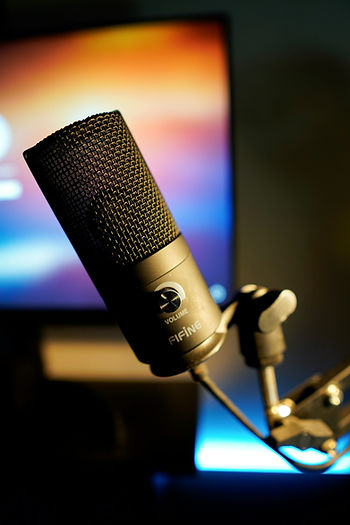
Photo by Rashidul Islam on Unsplash
(日本語は下にあります。)
Learning a language is not only about grammar and vocabulary; it is also about finding a voice that feels natural to you. When I first began learning Japanese, I struggled with this. Many beginner materials featured high-pitched female voices, which were difficult for me to imitate. I have a naturally low voice for a woman, and trying to match such a high register felt uncomfortable and discouraging.
My confidence changed when I shifted my listening habits. I began focusing on speakers whose pitch and rhythm felt closer to my own voice. Mimicking them was easier, and I felt more motivated because the sounds were realistic for me. While I am far from native-like, I have found a voice in Japanese that feels genuine and comfortable.
Pitch characterizes how high or low a person’s voice is when they speak. Research supports the idea that pitch in Japanese is flexible. Takano and Ota (2017) show that pitch varies with age, region and speaking style. Guillemot and Sano (2020) demonstrate that even gender expectations around pitch are not fixed. Research also shows that Japanese women tend to speak with a noticeably higher pitch than Western women, using significantly higher fundamental frequency than American women and consistently higher pitch than Dutch women due to sociocultural norms (Yamazawa & Hollien, 1992; van Bezooijen, 1995).
The key message for language learners of any language is simple: the goal is not to sound native but to sound natural and understandable in a way that fits who you are. Here are some top tips that you may find useful:
Listen to a variety of speakers.
Spend time listening to people from different genders, regions and backgrounds. You will notice very quickly that there is no single “correct” way to sound in any language. This helps you realise that your own voice also has a place.
Choose models you can realistically imitate.
Instead of forcing yourself to follow voices that feel unnatural, pick speakers whose pitch and style you can match without strain. This makes practicing more enjoyable and helps your confidence grow.
Prioritise clarity and rhythm instead of pitch.
Clear pronunciation, steady rhythm and natural pacing matter far more than how high or low your voice is. Even native speakers use a wide range of pitches, so focus on being understood rather than copying a specific tone exactly.
Record yourself regularly.
Listening back to your own voice helps you notice patterns, strengths and areas to adjust. It also shows you how your pronunciation improves over time, which can be very motivating.
Adjust your voice depending on the situation.
Just like native speakers switch between casual and formal styles, you can shift your pitch depending on context. You don’t need one “perfect” voice—just the ability to adapt when necessary.
Accept your natural pitch.
Your voice is part of who you are. Trying to force it into a shape that doesn’t fit only creates stress. When you work with your natural pitch instead of fighting it, language learning becomes far more comfortable.
Aim for communication, not imitation.
The goal is not to sound native. The goal is to sound like you. Practice can make you clear, confident and understandable. When you let go of the pressure to mimic others, your language ability grows more freely.
言語学習は文法や語彙だけでなく、自分に自然な話し方を見つけることでもあります。日本語を学び始めた頃、私はこれに苦労しました。多くの初心者向け教材には甲高い女性の声が使われており、私には真似が難しかったのです。私は女性としては元々声が低く、そんな高い声域に合わせようとすると不快でやる気を失いました。
聴き方を変えたことで自信が持てるようになりました。自分の声に近いピッチやリズムの話し手に注目し始めたのです。彼らを真似るのは容易で、自分にとって自然な発音だったためやる気も湧きました。ネイティブレベルには程遠いものの、日本語で自分らしく心地よい話し方を見つけられたのです。
ピッチは、人が話す際の声の高低を表します。 先行研究によると、日本語のピッチは柔軟であるという結果が示されています。高野と太田(2017)は、ピッチが年齢、地域、話し方によって変化することを明らかにしました。ギヨモと佐野(2020)は、性別によるピッチへの期待値すら固定されていないことを実証しています。さらに、日本の女性は、西洋の女性よりも明らかに高い声で話す傾向があるそうです。特に、アメリカ人女性よりもかなり高い声の高さ(基本周波数)を使い、オランダ人女性よりも一貫して高いピッチで話します。これは、社会文化的な習慣や価値観によるものだと言われています(Yamazawa & Hollien, 1992; van Bezooijen, 1995)。
どんな言語を学ぶ人に対しても、私が伝えたいことはとてもシンプルです。目指すのは「ネイティブのように話すこと」ではなく、「自分らしさを大切にしながら、自然でわかりやすく話すこと」です。そのたのヒントをいくつかご紹介します。
多様な話し手を聴く
性別・地域・背景の異なる人々の話し方を聴く時間を確保しよう。どの言語にも「唯一の正しい発音」など存在しないことにすぐに気づくでしょう。これにより、あなた自身の声にも存在意義があることが理解できます。
現実的に模倣できるモデルを選ぶ
不自然に感じる声を無理に真似るのではなく、無理なく音程や話し方を合わせられる話者を選びましょう。これにより練習が楽しくなり、自信も育まれます。
音程より明瞭さとリズムを優先する
明瞭な発音、安定したリズム、自然な話し方が、声の高低よりもはるかに重要です。ネイティブスピーカーでさえ幅広い声の高さを使います。特定のトーンを完璧に真似るより、理解されることに集中しましょう。
定期的に自分の声を録音する
自分の声を聴き返すことで、癖や得意な点、調整すべき箇所がわかります。また、発音が時間とともに上達していく様子が確認でき、大きなモチベーションになります。
状況に応じて声の調子を変えましょう
ネイティブスピーカーがカジュアルとフォーマルを切り替えるように、文脈に応じてトーンを調整できます。一つの「完璧な」声が必要なのではなく、必要な時に適応する能力が重要です。
自然な声の高さを受け入れましょう
あなたの声はあなた自身の一部です。無理に合わない形に押し込もうとするとストレスしか生まれません。自然な声の高さと戦うのではなく、それとうまく付き合う、言語学習ははるかに快適になります。
模倣ではなく、コミュニケーションを目指しましょう
目標はネイティブのように聞こえることではありません。目標はあなたらしく聞こえることです——明瞭で、自信に満ち、理解できる声で。他人を真似ようとするプレッシャーを手放すことで、言語能力はより自由に成長します。
References
Guillemot, C., & Sano, S. I. (2020). Gender- and register-biased patterns in F₀ use: How does prosody contribute to (in)formality in Japanese? In Proceedings of Speech Prosody 2020 (pp. 730–734). https://doi.org/10.21437/SpeechProsody.2020-148
Takano, S., & Ota, I. (2017). A sociophonetic approach to variation in Japanese pitch realizations: Region, age, gender, and stylistic parameters. Asia-Pacific Language Variation, 3(1), 5–40. https://doi.org/10.1075/aplv.3.1.02tak
Yamazawa, H., & Hollien, H. (1992). Speaking fundamental frequency patterns of Japanese women. Phonetica, 49(2), 128–140. https://doi.org/10.1159/000261907
van Bezooijen R. (1995). Sociocultural aspects of pitch differences between Japanese and Dutch women. Language and speech, 38 ( Pt 3), 253–265. https://pubmed.ncbi.nlm.nih.gov/8816084/

Author: Rheumi Jai
Email: rheu-jai@apu.ac.jp
![[SALC Spotlight 6] Steady Steps Forward: Erena’s Journey Through Upper Intermediate English / エレナの着実な歩み:準上級英語クラスを通して](https://static.wixstatic.com/media/042d95_d11eb3697b604310b720c54f8e8abe3d~mv2.png/v1/fill/w_980,h_261,al_c,q_85,usm_0.66_1.00_0.01,enc_avif,quality_auto/042d95_d11eb3697b604310b720c54f8e8abe3d~mv2.png)
![[SALC Spotlight 5] Hanae's Journey / 花恵さんの「ことばで広がる世界」](https://static.wixstatic.com/media/bb6517_a5c847901edc432eb6e1ad987dd02052~mv2.png/v1/fill/w_980,h_261,al_c,q_85,usm_0.66_1.00_0.01,enc_avif,quality_auto/bb6517_a5c847901edc432eb6e1ad987dd02052~mv2.png)
